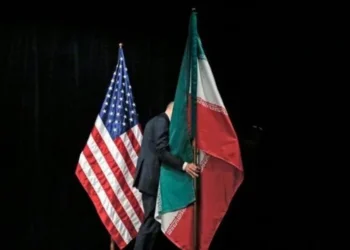
Iran’s Supreme National Security Council has declared victory over what it described as the “enemy” following a 40 day conflict, issuing a formal statement shortly after the announcement of a ceasefire by Donald Trump. The council stated that the outcome was achieved through sustained military pressure and the continued presence of Iranian forces on the battlefield.
According to the statement, Iranian leadership rejected repeated calls from the opposing side to halt hostilities over the past month. Officials maintained a fixed position from the outset, insisting that the war would continue until strategic objectives were achieved. These objectives included forcing the adversary into a position of regret and exhaustion, while removing what was described as a long term threat to national security. The conflict, the council noted, continued until what it referred to as the fortieth day milestone.
Rejection of US Deadlines and Assertion of Strategic Gains
The council confirmed that Iran had repeatedly dismissed deadlines issued by the United States, stating that such ultimatums held no weight in its decision making process. It further claimed that the majority of its war objectives had now been achieved, asserting that Iranian forces had imposed a new regional security and political reality.
The statement described this shift as one in which Iran and the resistance axis are now recognised as dominant forces, with the opposing side pushed into what it labelled a state of historic incapacity and lasting defeat.
Islamabad Negotiations to Formalise Outcome
Iran confirmed that negotiations would take place in Islamabad to finalise the political dimensions of its claimed victory. These talks are expected to last up to 15 days, with the aim of translating battlefield outcomes into formal political agreements.
The council revealed that it had submitted a 10 point framework to the United States through Pakistan, outlining key conditions for any agreement. Among the central demands is the regulated passage through the Strait of Hormuz under coordination with Iranian armed forces, a move framed as securing a critical economic and geopolitical position for Iran.
Core Conditions: Military Withdrawal, Sanctions Removal, and Compensation
The proposed framework includes several major conditions. These include a complete end to military operations against all components of the resistance axis, which the council described as marking a historic defeat for Israeli aggression. It also calls for the withdrawal of US combat forces from all bases and deployment points across the region.
Additional provisions include the establishment of a formal protocol governing safe passage through the Strait of Hormuz under Iranian oversight, full financial compensation to Iran based on assessed damages, and the lifting of all primary and secondary sanctions. The statement also demands the cancellation of resolutions issued by international governing bodies and the release of all frozen Iranian assets held abroad.
The council stressed that these terms must be formalised through a binding resolution issued by the United Nations Security Council.
US Acceptance of Negotiation Framework
According to the statement, Pakistan’s prime minister informed Tehran that the United States, despite maintaining a public posture of threat escalation, has accepted these principles as the basis for negotiations. The council characterised this as a submission to the will of the Iranian people.
Iran confirmed that it has entered into negotiations with the United States in Islamabad under these terms. However, it emphasised that this does not signal the end of the war. The conflict, it stated, will only be considered concluded once all details of the proposed framework are finalised in negotiations.
High Alert Maintained Amid Negotiations
The council underscored that negotiations would begin under conditions of complete distrust towards the United States. The initial timeframe has been set at two weeks, with the possibility of extension subject to mutual agreement.
The statement concluded with a direct warning, affirming that Iranian forces remain on full alert and ready to respond. It warned that any minor misstep by the opposing side would be met with a decisive and forceful reaction.