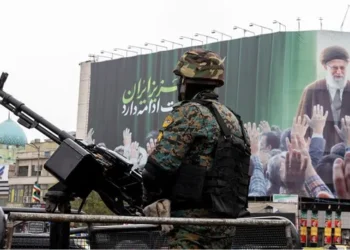
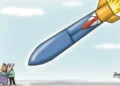
As the war waged by the United States and Israel against Iran enters its second month, a new geopolitical reality is emerging around the meaning of victory and its broader implications for the global order. At the centre of this shift lies the Strait of Hormuz, a critical energy artery that Iran has effectively brought under its control.
Opinion pieces published in The Hill and The New York Times suggest that while Washington may be winning battles, it is losing the war strategically. Iran, meanwhile, appears to be executing a “David versus Goliath” approach, leveraging economic uncertainty and geographic influence to destabilise a US-led global system.
Winning by Not Losing
In The Hill, Harlan Ullman, architect of the “shock and awe” doctrine, warns that the United States is repeating the same strategic failures seen in Vietnam, Afghanistan, and Iraq.
He argues that despite US and Israeli forces having effectively neutralised Iran’s relatively limited air and naval capabilities, such metrics are irrelevant in determining the ultimate outcome. In asymmetric conflicts, weaker actors increasingly succeed simply by avoiding defeat.
For Iran, success is not measured in destroyed aircraft or naval assets, but in global fuel prices and the performance of US stock markets. Ullman stresses that the war itself was launched on flawed justifications, drawing parallels to the search for weapons of mass destruction in Iraq. Even if Iran were subjected to overwhelming bombardment, Washington would remain vulnerable to a prolonged war of attrition, where the mere survival of the Iranian state constitutes a strategic loss for the United States.
The Rise of a Fourth Power
Robert Pape, writing in The New York Times, identifies a structural shift in the global system. The traditional view of a tripolar world dominated by the United States, China, and Russia is becoming obsolete, with Iran rapidly emerging as a fourth centre of power.
Pape explains that Iran’s strength does not lie in conventional military or economic weight, but in its control over the Strait of Hormuz, the most critical energy chokepoint in the global economy. The current war has enabled Iran to impose a form of military blockade over this passage, reshaping international relations.
Importantly, Iran does not need to physically close the strait to exert control. By targeting a single commercial vessel every few days, it can reduce traffic by more than 90 percent, as insurance companies withdraw coverage. This creates a highly asymmetric dynamic: the United States would need to secure every oil shipment continuously, while Iran only needs intermittent disruption to undermine global confidence.
Strategic Dilemma for the West
This evolving reality is forcing a global reassessment. French President Emmanuel Macron has already signalled divergence from Washington, describing any attempt to forcibly reopen the strait as unrealistic. This reflects a growing acknowledgement that global energy flows are now contingent on engagement with Iran.
Energy Alignment and Global Realignment
Pape warns that the long term consequences of this shift could severely weaken Western influence. Gulf states and major Asian economies, including Japan, South Korea, and India, have already been impacted by disruptions linked to the Strait of Hormuz.
At the same time, Iran, Russia, and China are forming what can be described as a natural alignment based on overlapping interests. Iran gains leverage at a critical chokepoint, Russia benefits from elevated and volatile energy prices, and China secures continued growth by absorbing energy supplies redirected away from Western markets.
This emerging alignment raises the prospect of a return to conditions resembling the stagflation crisis of the 1970s. A coordinated dynamic between Iran and Russia alone could restrict up to 30 percent of global oil supply, triggering a sharp decline in US and European economic power and accelerating a global shift toward China, Russia, and Iran.
A Rewritten Global Order
Both analyses converge on a central conclusion: the global order is already undergoing structural transformation. Even in the event of a ceasefire, Iran is expected to demand a significant strategic price, reflecting its new status as a gatekeeper of global energy flows.
Under this scenario, the United States faces a critical choice. It must either commit to a sustained and costly military presence in the Gulf or accept the emergence of a new global order in which its control over energy is no longer assured.